In what situations should fibroids be treated with surgery?
BY DR. BROOKE WINNERFibroids are benign growths in the muscular wall of the uterus, and about 80% of women will develop them at some point.

Whether or not treatment is necessary depends on how they affect you. Here are some key points to consider:
Symptoms: If fibroids are located near the lining of the uterus, they can cause heavy or irregular bleeding and may affect fertility. Fibroids located within or outside the wall of the uterus may grow large enough to press on nearby organs, leading to pelvic pain, pressure, and “bulk symptoms.” These can feel like a heavy weight in the pelvis or cause issues such as frequent urination or constipation.
Medications: There are medications available to manage heavy bleeding from fibroids. These can be non-hormonal or hormonal. However, some women do not tolerate hormonal side effects, and these medications typically do not decrease the size of fibroids.
Surgical Options: If medications do not relieve your symptoms or are not suitable for your situation, surgery may be needed. This is especially true if you have significant symptoms from the fibroids. In some cases, non-surgical treatments may help shrink fibroids, but if those options fail, surgery could be a suitable choice.
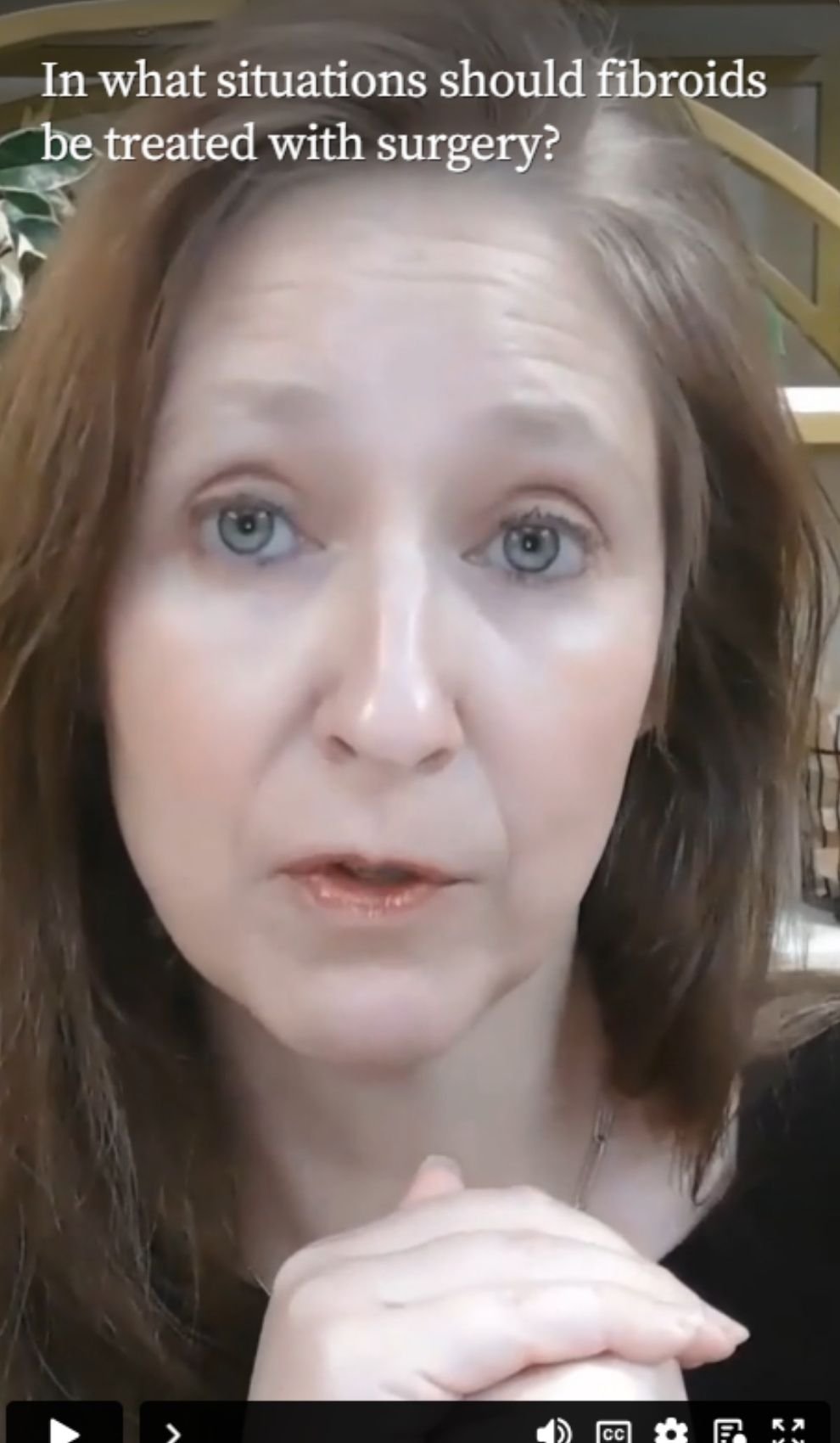
Do you prefer to watch it?
Join Dr. Brooke Winner as she explains when fibroids should be treated with surgery—covering symptoms, fertility concerns, and treatment options.
Similar Posts